Why Some Surveyors Struggle with Tech & How to Finally Make Automation Work
Implementing Automation in Surveying Workflows: Overcoming Challenges, Managing Team Change, and Future-Proofing Your Business
Digital transformation is no longer a trend in the surveying industry – it’s a strategic necessity. As workflows grow more complex and client expectations continue to rise, the need to streamline, automate, and modernise operations is becoming increasingly urgent. From CRM platforms to report automation and AI-assisted processes, firms of all sizes are exploring new ways to work smarter, reduce manual effort, and scale effectively.
But introducing automation into existing workflows isn’t without its hurdles. Many businesses still struggle with internal resistance, training gaps, fragmented systems, or a simple lack of time to embed new tools properly. Understanding these barriers – and how to overcome them – is critical for surveyors looking to thrive in an evolving marketplace.
Automation Uptake: A Divided Landscape
According to the Royal Institution of Chartered Surveyors (RICS) 2024 Digitalisation Report, nearly 58% of UK-based surveying firms have adopted at least one form of digital automation. These include appointment scheduling, CRM systems, data capture tools, report generation software, and automated communications.
Yet, only 24% of small firms feel confident that they are using those systems to their full potential. That confidence gap highlights the core issue: while technology is widely available, successfully embedding it into daily workflows is another story.
“Many businesses buy software thinking it’s a magic bullet, but without clear internal processes and buy-in from staff, it’s just another overhead,”
Andrew Weston, Director at Weston Property Group.
Common Implementation Challenges
1. Lack of Time for Training
Surveyors are time-poor. With busy diaries and increasing demands, dedicating hours to learn a new platform feels unrealistic. A recent Survey Booker survey found that 67% of respondents saw ‘lack of time’ as the biggest barrier to successful adoption.
What helps: Training doesn’t need to be intensive or all at once. Firms that break onboarding into short, task-specific sessions see far greater engagement and retention. Think 15-minute tutorials over hour-long webinars.
2. Resistance to Change
Digital hesitation remains a cultural hurdle. Long-established professionals may be cautious of change, particularly if they’ve used the same methods for years with consistent results. “If it’s not broken, why fix it?” is still a common refrain.
What helps: Make the benefits relatable. Rather than pitching automation as “tech,” show how it reduces repetitive admin, speeds up payment collection, or improves survey turnaround time. Involving the team in decision-making also fosters ownership and reduces pushback.
3. Fragmented Tech Stack
Adopting multiple digital tools without integration can create more work, not less. Systems that don’t talk to each other force staff to duplicate data entry or jump between platforms.
What helps: Choose tools with integration capabilities or built-in workflows. Platforms like Survey Booker offer connected solutions that consolidate admin, sales, diaries, and reporting – eliminating silos and saving hours each week.
4. Cost Misconceptions
While some see automation as a costly luxury, data from the UK PropTech Association shows that automation can improve productivity by up to 30% within six months when properly embedded.
What helps: Consider the cost of inefficiency, missed leads, delays in reporting, and client complaints. A modest monthly investment in the right tool can pay for itself through recovered time alone.
Managing Change Within Your Team
Introducing new systems is as much about people as it is about tech. Without a clear strategy for change management, even the most powerful tools can fail.
Involve early: Don’t spring change on your team – include them in demos and planning discussions.
Empower internal champions: Let confident users support others through peer-to-peer learning.
Keep training digestible: Offer microlearning and tutorials focused on real-world tasks.
Recognise progress: Shout about wins, like improved turnaround times or reduced admin, to build momentum.
“A shift in mindset is as critical as the shift in tools. People don’t need to become coders – they just need to see how it helps them do their job better.”
Clare Benson, Change Manager at Digital Survey Group
Preparing for the Future
Automation is just the beginning. As AI, drone inspections, and 3D modelling become more commonplace, firms that haven’t laid the groundwork with solid digital workflows risk falling behind.
Here’s how to future-proof now: Audit your current workflows – where is time being lost or duplicated? Invest in scalable systems – choose flexible platforms that grow with your business. Secure your data – ensure GDPR compliance and train your team on best practices. Track meaningful metrics – go beyond jobs booked and monitor customer feedback, team performance, and lead conversion.
Automation isn’t a shortcut – it’s a strategic lever. The firms that thrive are those that take the time to onboard properly, train their teams thoughtfully, and select systems that align with their values and vision.
In a market where speed, clarity, and customer service are more important than ever, embracing the right technology, at the right time, can mean the difference between surviving and leading.
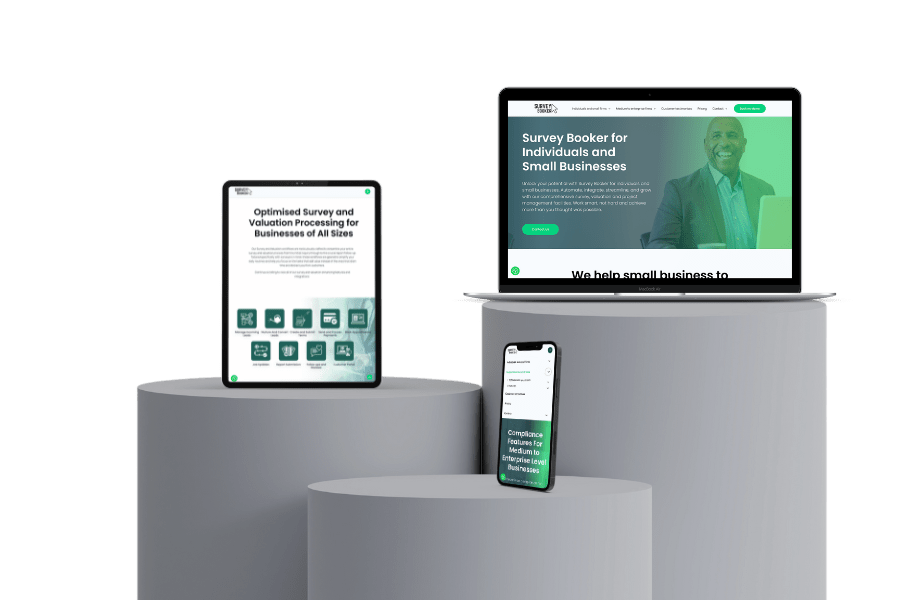
Making tech adoption easy with Survey Booker.
Survey Booker is more than just software — it’s a hands-on rollout partner that makes adopting automation simple, smooth, and fully supported. Whether you’re a sole trader or managing a large team, we take the time to understand your business and tailor onboarding around your real workflows.
From initial setup to ongoing optimisation, Survey Booker helps you manage users, track performance, reduce admin, and improve communication — ensuring your team feels confident and your processes stay efficient as you grow.