Speed, Systems & First Impressions – Why Surveying Workflows Start Before the First Phone Call

Reallymoving X Survey Booker

In a competitive market, most surveyors are not necessarily short of enquiries.

What increasingly makes the difference is what happens in the minutes immediately afterwards.

  • The speed of response.
  • The clarity of communication.
  • How quickly information is processed.
  • And the impression a firm gives before a conversation has even taken place.

For many surveying businesses, that early enquiry stage is becoming one of the most important operational touchpoints in the entire client journey and increasingly, one where automation and connected workflows are beginning to play a significant role behind the scenes.

The Modern Enquiry Journey Has Changed


Today’s customers move quickly.

By the time an enquiry lands with a surveying firm, the customer may already have:

  • compared multiple companies
  • requested several quotes
  • searched reviews
  • checked qualifications
  • looked at response times
  • formed opinions based on communication alone

In many cases, decisions begin forming long before the first phone call happens.

That does not mean surveying has become less personal. Far from it. Professional expertise, trust, and communication remain hugely important.

However, expectations around speed and responsiveness have undoubtedly shifted and operational delays at the enquiry stage can quickly create friction before the professional relationship has even begun.

The Modern Enquiry Journey Has Changed


Today’s customers move quickly.

By the time an enquiry lands with a surveying firm, the customer may already have:

  • compared multiple companies
  • requested several quotes
  • searched reviews
  • checked qualifications
  • looked at response times
  • formed opinions based on communication alone

In many cases, decisions begin forming long before the first phone call happens.

That does not mean surveying has become less personal. Far from it. Professional expertise, trust, and communication remain hugely important.

However, expectations around speed and responsiveness have undoubtedly shifted and operational delays at the enquiry stage can quickly create friction before the professional relationship has even begun.

Automation Is Why Connected Systems Matter


One of the biggest operational challenges for many firms is not a lack of software, but disconnected software.

Enquiries arrive in one place.
Client communication happens elsewhere.
Quotes sit in another system.
Tasks are tracked separately.
Information gets copied manually between platforms.

That is where connected workflows become increasingly valuable.

Rather than forcing firms into rigid processes, modern integrations allow systems to work together more fluidly, helping businesses build workflows around the way they already operate.

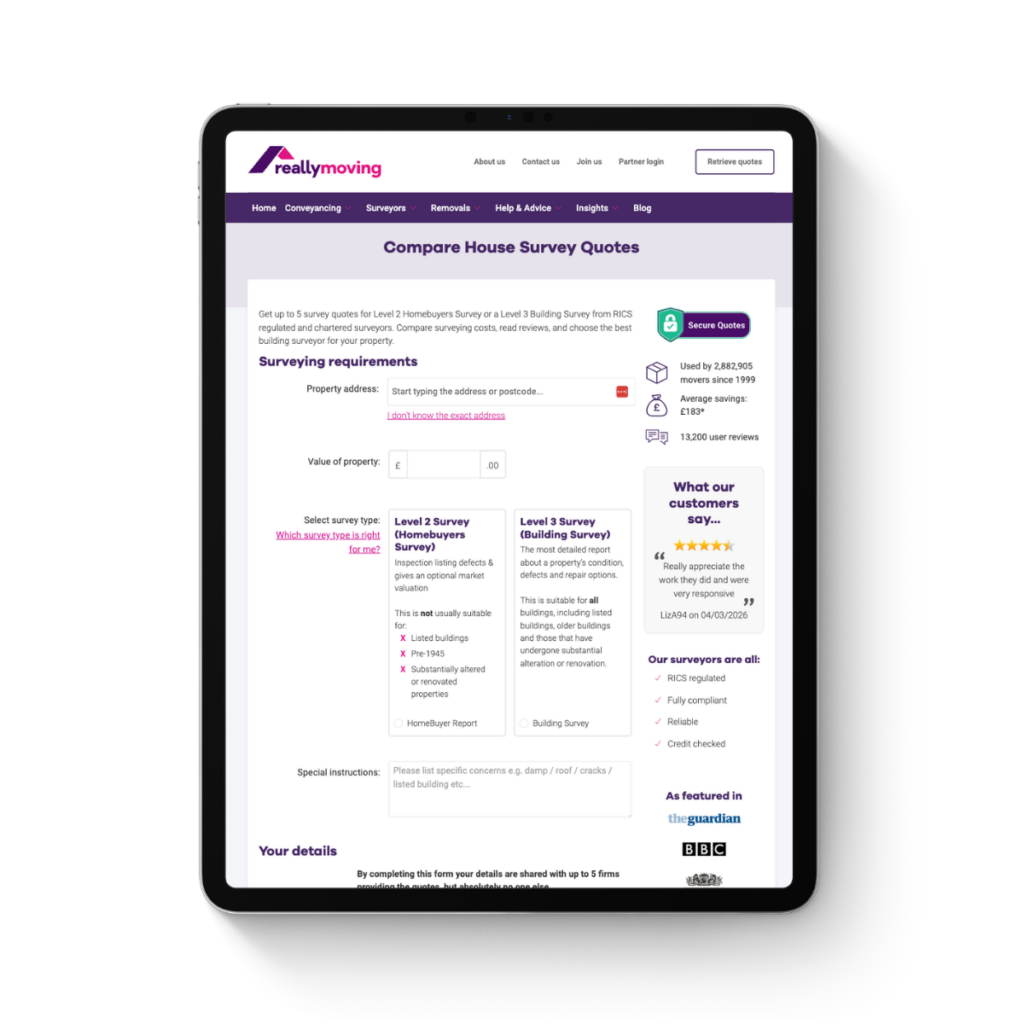
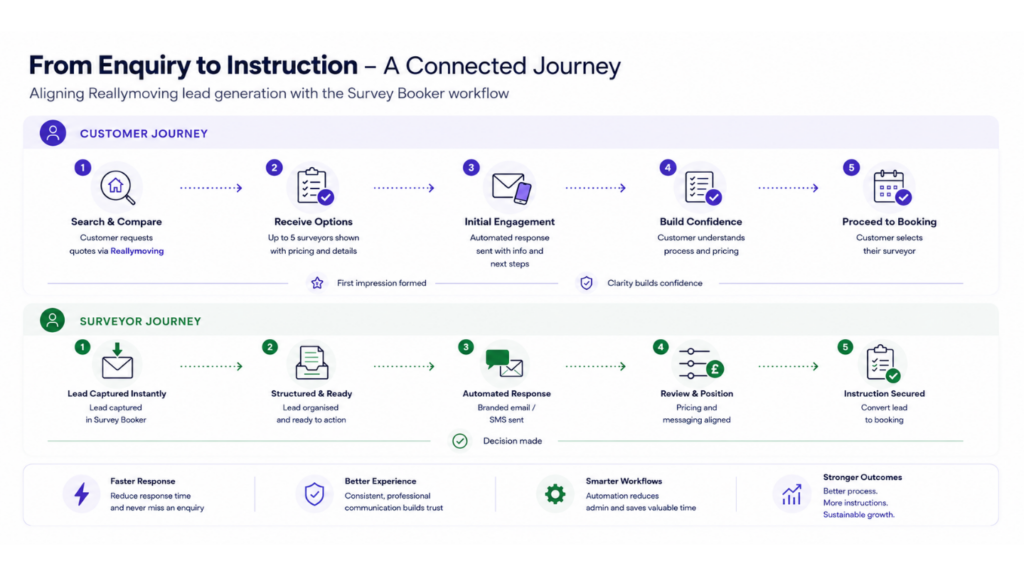
Through the Reallymoving × Survey Booker integration, enquiries submitted through Reallymoving can flow directly into Survey Booker, allowing firms to respond faster and manage enquiries more consistently from the outset.

Rather than manually rekeying information or working through disconnected admin processes, the workflow can begin automatically from the moment an enquiry is received.

Supporting Faster, More Consistent First Responses

That automation does not have to mean generic communication.

One of the key advantages of connected workflows is flexibility. Different firms operate differently and the enquiry journey should reflect that.

Some surveyors may choose to:

  • send a firm quotation immediately
  • provide indicative pricing
  • begin with a more consultative approach
  • encourage a phone conversation first
  • prioritise specific enquiry types or locations

The system simply supports the workflow behind that decision.

What matters commercially is often consistency. When enquiries are handled promptly and professionally, firms are far better positioned before the customer even picks up the phone.

That first interaction quietly shapes perception:

  • responsiveness
  • organisation
  • professionalism
  • clarity
  • trust

And in a market where customers are frequently comparing multiple firms simultaneously, those early impressions carry weight.

For some firms, lead generation also becomes a flexible operational tool, helping target specific locations, manage quieter periods, or support growth in particular service areas.

Supporting conversion, without over-automating it


As automation and AI continue becoming more visible across the wider property industry, there is naturally ongoing discussion around how much technology should influence professional services.

In practice, however, the most effective operational systems are typically the ones supporting professionals rather than trying to replace them.

Automation may help:

  • trigger workflows
  • organise information
  • reduce repetitive admin
  • improve response times
  • maintain communication consistency

But expertise, judgement, advice, and client relationships still sit firmly with the surveyor.

If anything, reducing operational friction allows firms to spend more time focusing on the areas where professional experience matters most.


The Bigger Operational Picture

The broader shift happening across surveying is not simply about adopting more technology for the sake of it.

It is about creating workflows that are:

  • connected
  • scalable
  • flexible
  • consistent
  • commercially efficient

For many firms, the challenge is no longer generating enquiries alone. It is managing them effectively, responding consistently, and ensuring operational processes support rather than slow down the customer journey.

That is where connected systems and intelligent workflow automation are increasingly proving valuable behind the scenes.

Not by replacing the surveyor.

But by helping the business around the surveyor operate more effectively from the very first interaction onwards.

 
Scroll to Top