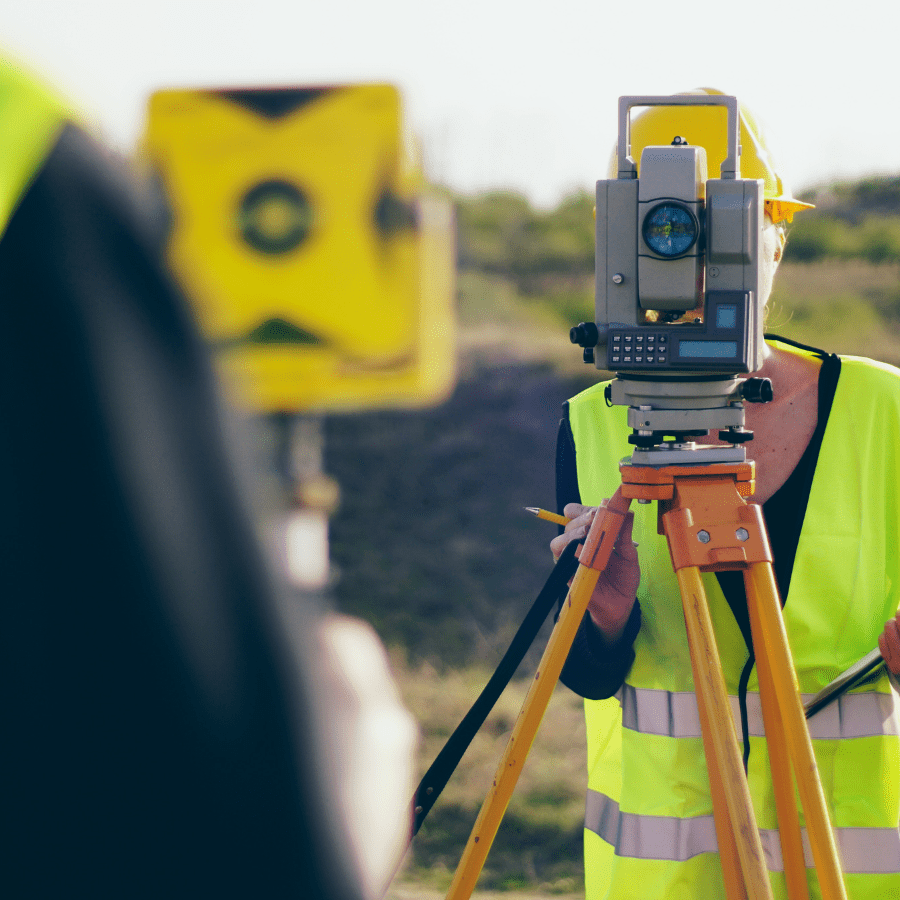
AI in Land Surveying: Faster, smarter, more precise
Artificial intelligence is no longer a futuristic concept reserved for tech labs and software developers – it’s rapidly becoming a practical, game-changing tool for land surveyors across the UK. As the property, planning and infrastructure sectors become more complex and data-driven, AI is quietly revolutionising the way surveyors work- making processes faster, safer and more precise.
One of the most significant changes is the rise of AI-powered drones in aerial surveying. These systems are now capable of capturing high-resolution topographic data over vast areas in a fraction of the time traditional methods require. For surveyors, this doesn’t just mean better data – it means spending less time in the field and delivering results to clients faster than ever before.
According to Spatial Dimensions, a UK-based land and building survey specialist, “The integration of AI and drones has transformed traditional surveying practices, providing faster, more efficient, and safer data collection methods.” With automation handling the data capture and processing, surveyors can focus on interpreting results and advising clients, rather than spending hours walking sites or stitching together imagery.
Beyond aerial work, AI is proving indispensable in post-survey analysis. Machine learning models can now automatically classify terrain features, spot anomalies, and even detect defects in infrastructure from image or LiDAR data. This technology significantly cuts down the manual review process, which has long been one of the more time-consuming (and error-prone) elements of land surveying.
A recent example from a surveying team in the East Midlands saw machine learning used to detect historic subsidence risks from drone data, helping a client assess suitability for a large-scale development. What would have taken days of manual analysis was completed in hours – with AI picking up subtle ground patterns that might otherwise have been missed.
AI is also entering the decision-making space. Predictive modelling tools are being used to forecast future land conditions, analyse flood risk, and even anticipate planning constraints based on historical data. This is particularly valuable in early-stage feasibility studies. “Machine-learning algorithms can develop predictive models and simulations that forecast future trends, assess risks, and optimise decision-making,” says a spokesperson from Dalcour Maclaren, one of the UK’s leading land and environmental surveyors.
Despite the excitement, it’s not all smooth sailing. Implementing AI takes more than just plugging in software. It demands investment in equipment, training, and data infrastructure – not to mention thoughtful integration into existing workflows. There’s also the challenge of keeping the human touch. As GoReport points out, “AI can automate a lot, but it can’t replace the surveyor’s insight, judgment and experience. You still need a professional to tell the story behind the data.”
The regulatory landscape is also evolving to meet this new reality. In response to increasing adoption, the Royal Institution of Chartered Surveyors (RICS) recently launched a public consultation on the responsible use of AI in the profession. Ethics, transparency, and proper validation of AI tools are front and centre as the sector adapts to a new era of data-led decision making.
Looking forward, AI is set to become even more embedded in how surveyors operate. Building Information Modelling (BIM), already widely used in the built environment, is now being enhanced with AI to automate everything from clash detection to quality assurance in real time. Tools are in development that will allow real-time AI analysis of site footage, instantly flagging potential safety hazards or structural anomalies.
As this technology matures, surveyors who adopt AI thoughtfully stand to gain a significant edge. Not just in terms of speed or cost, but in the quality of insight they can deliver. In a competitive market, the ability to deliver smart, data-rich reports – faster than ever before – is becoming a key differentiator.
Artificial intelligence isn’t here to replace the surveyor. It’s here to empower them.
Curious about how automation could support your day-to-day practice?
For more practical insights, technology guides, and surveyor-focused tools, be sure to subscribe to our monthly newsletter or browse the latest articles on our blog.